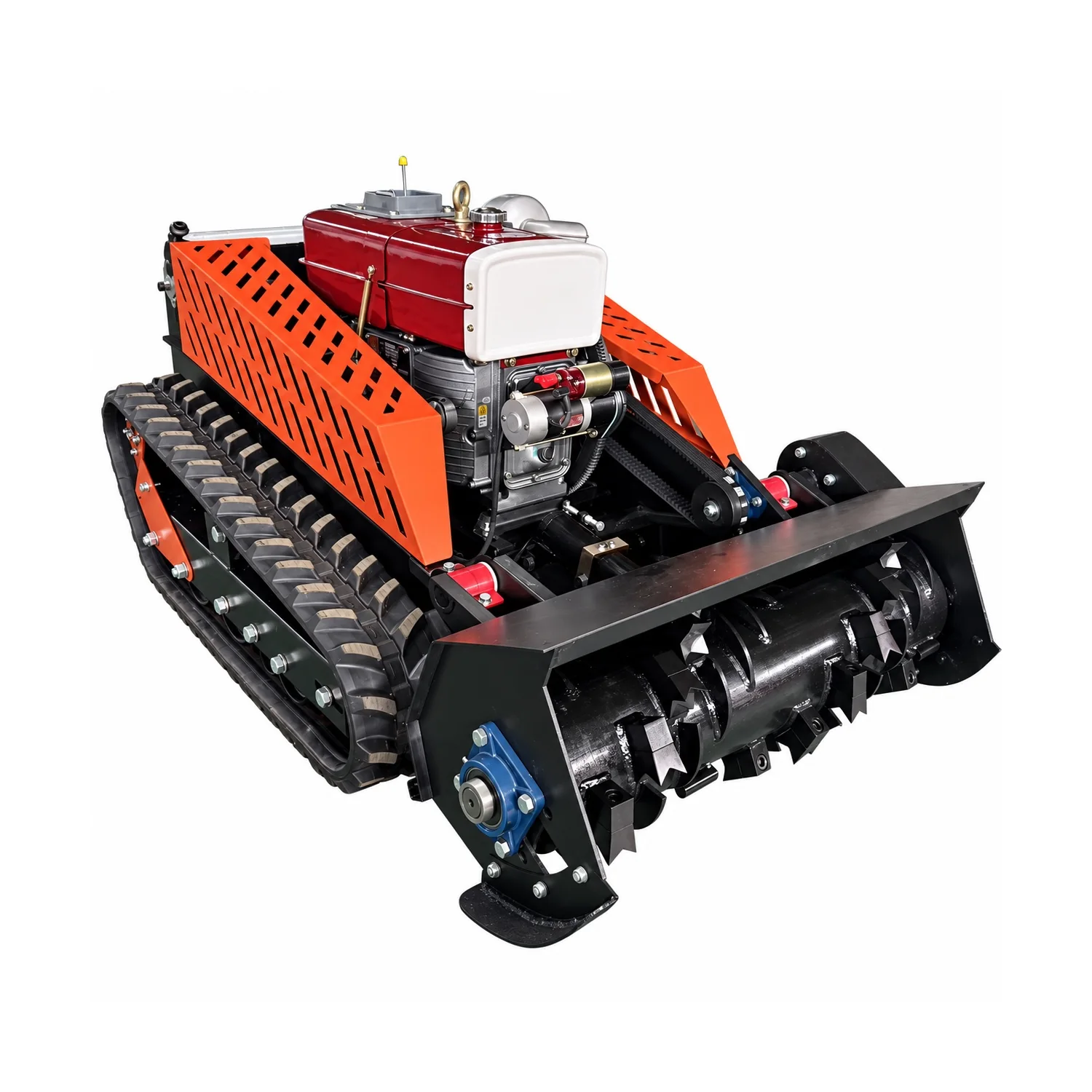
Short answer: Black locust is hard, dense and often thorny, and it sends up root suckers after cutting. A forestry mulcher handles young stands and smaller stems well, but plan slower passes, check teeth often and fell larger trunks first. Expect regrowth and include follow-up cuts in the job plan.
What makes black locust tough
Black locust wood is hard and dense. That is why old fence posts are often made from it. Dense wood loads the rotor more and wears teeth faster than soft species of the same size.
Young stems and suckers carry sharp thorns. The species also spreads by root suckers, so a cleared patch can come back thicker.
Stem size and approach
| Stem size at cutting height | Approach |
|---|---|
| Suckers and saplings | Continuous passes |
| Up to about 15 cm | Slower forward speed; one stem at a time in clumps |
| 15–30 cm | Only under suitable conditions; plan extra time |
| Over 30 cm | Fell with a chainsaw first |
Based on the ME-RFM1000 rating of up to 30 cm under suitable conditions. Hard wood narrows the practical range.
Teeth and rotor care
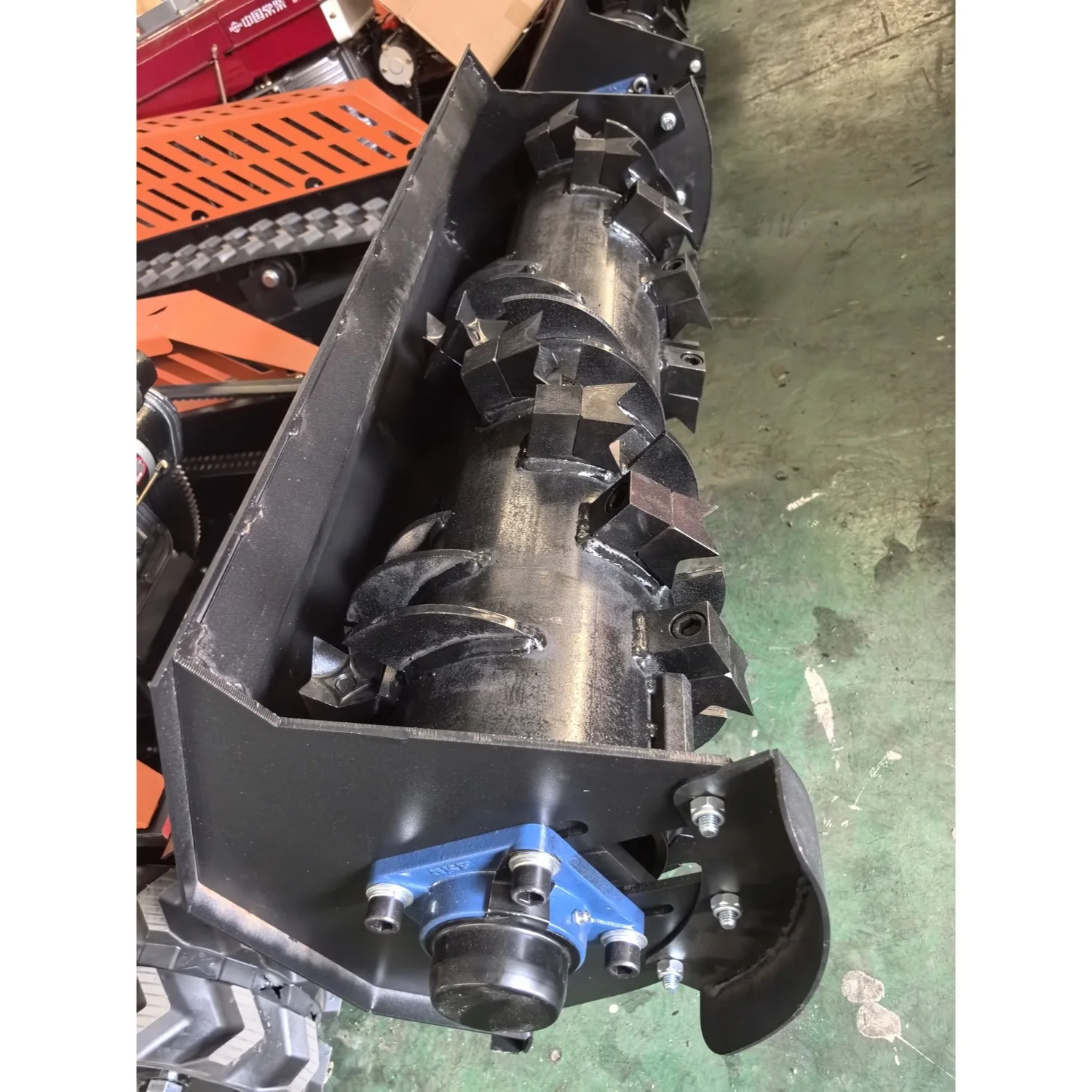
The ME-RFM1000-D offers horseshoe or toothed blades. Whichever you run, check tooth condition at every break in hard wood. A worn tooth makes every stem feel bigger and adds strain to bearings and drive. Keep spare teeth and bolts on site for larger jobs.
Thorns and the crew
Thorny brush is unpleasant and risky for hand crews. A remote mulcher keeps the operator out of the thicket. Ground crews dragging brush or felling trees should wear heavy gloves and eye protection. Tracked machines avoid the tyre punctures that thorny regrowth can cause on wheeled equipment.
Why locust comes back thicker
Black locust spreads through its roots. When the main stem goes, root suckers can appear in a ring around it, each with thorns. Young suckers are soft and easy to cut in their first season, but they harden quickly. Plan the first follow-up visit early in the growing season after clearing.
Old fence lines
Black locust often grows along old fence lines, sometimes from old posts. Expect hidden wire and staples. Walk the line first and pull visible wire. Stop at once if wire wraps the rotor.
Quoting
- Time a sample area; hard wood slows output.
- Add tooth wear to the job cost.
- Price felling of large trunks separately.
- List follow-up sucker cuts as repeat items.
A worked example
A landowner wants an old pasture back from a black locust stand along a fence line. The crew walks the line and pulls loose wire. Two trunks over 30 cm are felled with a saw. The remote mulcher then clears the stand in slow passes, with a tooth check at each break because of the hard wood. The quote lists a sucker cut early next season and another in late summer. The fence line is mapped so the follow-up crew knows where suckers will appear.
Recognising it on the site walk
- Compound leaves made of many small, rounded leaflets.
- Paired thorns where the leaves join the stem, most obvious on young growth.
- Deeply furrowed bark on older trunks.
- Hanging clusters of white, scented flowers in late spring, and flat brown pods later.
Note the trunk sizes along any old fence line. That is where the largest stems and the most wire usually are.
Using your own wear figures
Dense wood wears teeth faster than most other brush. Record the machine hours and the teeth replaced on each locust job. After two or three jobs, you will have your own figures for wear per hour. Use them to set the wear line in the next quote, instead of a guess.
Checking for suckers a few weeks later
Walk the cleared area a few weeks after the job. Look for suckers in a ring around each old stump, and well beyond it. Mark the outer edge of the sucker zone, so the follow-up cut covers all of it.
For US sites
Diesel models are not supplied to the US market. For jobs in the US, ask MERI about the electric ME-RFM1000-E, which climbs 45° and works on slopes up to 35°. Its remote range is 200 m, so plan where the operator stands before work starts.
Common mistakes
- Running worn teeth in dense wood.
- Ignoring old wire in fence-line stands.
- Skipping the early follow-up cut.
Related MERI pages
- ME-RFM forestry mulcher FAQ
- ME-RFM1000-D diesel mulcher
- Horseshoe vs toothed blades
- Mulcher teeth wear and replacement
- Keeping fence rows clean
Frequently asked questions
Is black locust hard to mulch?
It is dense wood, so it loads the rotor and wears teeth faster than softer species of the same size.
Will black locust come back after mulching?
Often, yes, from root suckers. Plan follow-up cuts.
Do thorns damage tracked machines?
Tracked machines avoid tyre punctures, but crews on foot need gloves and eye protection.
What size can the ME-RFM1000 handle?
Trees and branches up to 30 cm under suitable conditions. In hard wood, stay well below that.
Send us your site details
Tell us the job, area, slope and country. MERI replies within 24 hours.
Need a forestry mulcher recommendation for your terrain or project?
Get a Quote