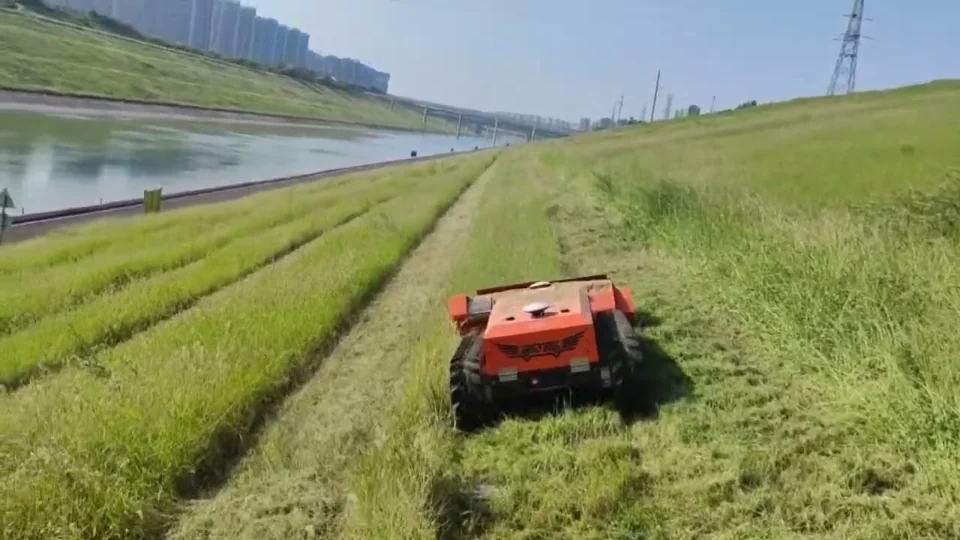
Short answer: Canal and irrigation banks need short enough vegetation to inspect for leaks, slips and burrows, and to keep access tracks open. Mow banks on a cycle, keep machines out of the water, remove woody growth early and use remote tracked mowers on steep inner banks.
Why mow
- See seepage, slips and cracks.
- Find animal burrows.
- Keep access tracks open.
- Stop woody roots weakening banks.
Areas
| Area | Approach |
|---|---|
| Outer bank | Regular mowing |
| Inner bank | Remote mower; stay out of water |
| Crest and track | Keep open |
| Structures | Hand work around gates |
Water safety
Never drive into the channel. Keep the operator on the crest with the remote.
Machines
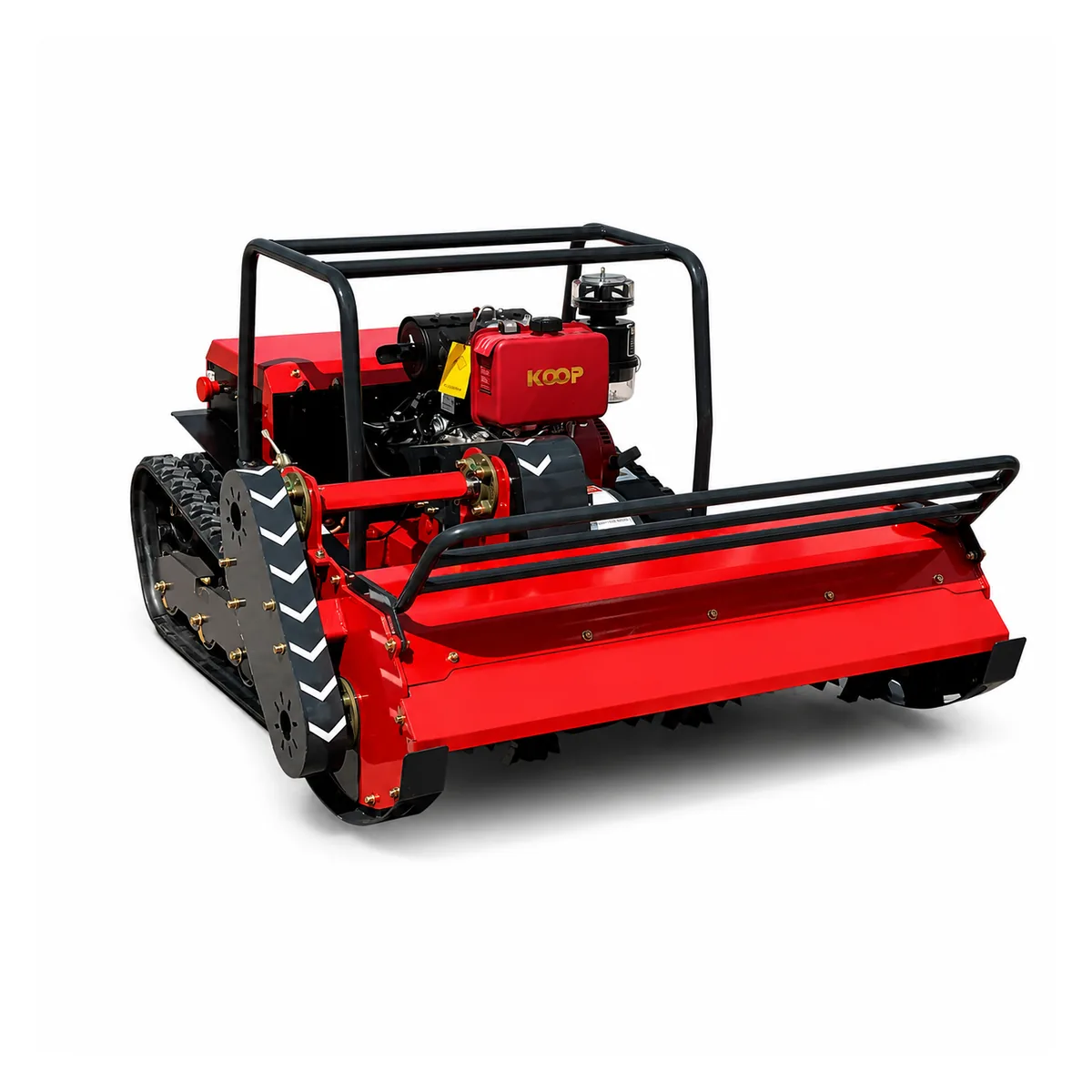
MERI tracked mowers are rated to 45° and flail models cut 30–300 mm.
Timing
Cut before inspections and outside nesting seasons where rules apply.
Woody growth
Mulch saplings before they root deeply.
Records
Log banks cut and any defects seen for the inspection team.
Irrigation season
Many irrigation channels run full in summer and are drained in winter. Plan inner bank work for low-water periods when banks are firmer and inspections are easier.
Surveying the banks
- Walk the length and mark steep, soft and eroding sections.
- Note structures: gates, weirs, outlets, bridges and fences.
- Record burrows and slumps, which weaken banks.
- Note access points and where a trailer can unload.
- Check how close the water is to the top of the bank in the irrigation season.
Banks change through the year. A survey before the main mowing season shows where the machine can work safely and where to keep away from the edge.
Water edge safety
Do not drive close to the water edge on soft or undercut banks. Keep a safe distance from the edge and cut the last strip by other means if needed. With a remote mower, the operator stays on the bank top or the service track, away from the water. MERI tracked mowers are rated to 45°, and the machine stops if the remote signal is lost. Plan a rescue and recovery method before work starts.
Season plan
| Period | Task |
|---|---|
| Before irrigation season | Main cut; clear banks for inspection |
| During irrigation | Light cuts; check for leaks and slumps |
| After irrigation | Cut back woody growth; repair banks |
| Winter | Inspect and plan repairs |
Cutting before the irrigation season makes banks easy to inspect for leaks and burrows while water levels are still low.
Common mistakes
- Driving along undercut edges.
- Leaving cut material on the bank face, where it slides into the water.
- Missing burrows hidden in long grass.
- Mowing in the irrigation peak when banks are saturated.
Worked example: a district channel network
An irrigation district has 25 km of channel banks. The main cut is planned in the four weeks before water is let in, starting with sections where leaks were found last year. Steep sections near structures are cut with a remote tracked mower, which keeps the operator on the service track. Flatter sections are cut with the district’s tractor mower. During the irrigation season, a light cut is done only on sections where growth hides the waterline. After the season, woody growth is cut back and bank repairs are scheduled.
What the inspection team needs
- Sections cut and date.
- Burrows, slumps and leaks found.
- Woody growth removed.
- Wet or soft sections avoided.
- Structures checked.
These records help the district plan repairs and show which sections need attention every year. Photos of each defect, with the section number and date, let engineers judge urgency without a separate visit. Share the records before the irrigation season starts, so repairs can be done while channels are still dry.
Working near water: team rules
Never work alone on channel banks. Agree a check-in time with the office, carry a throw line, and know the nearest access point for emergency services.
Related MERI pages
Frequently asked questions
Why mow canal banks?
To inspect for seepage, slips and burrows.
Can the machine enter the water?
No, stay out of the channel.
Which mower works inner banks?
A remote tracked mower rated to 45°.
Why remove saplings?
Roots can weaken banks.
Send us your site details
Tell us the job, area, slope and country. MERI replies within 24 hours.
Need a mower recommendation for your terrain or project?
Get a Quote