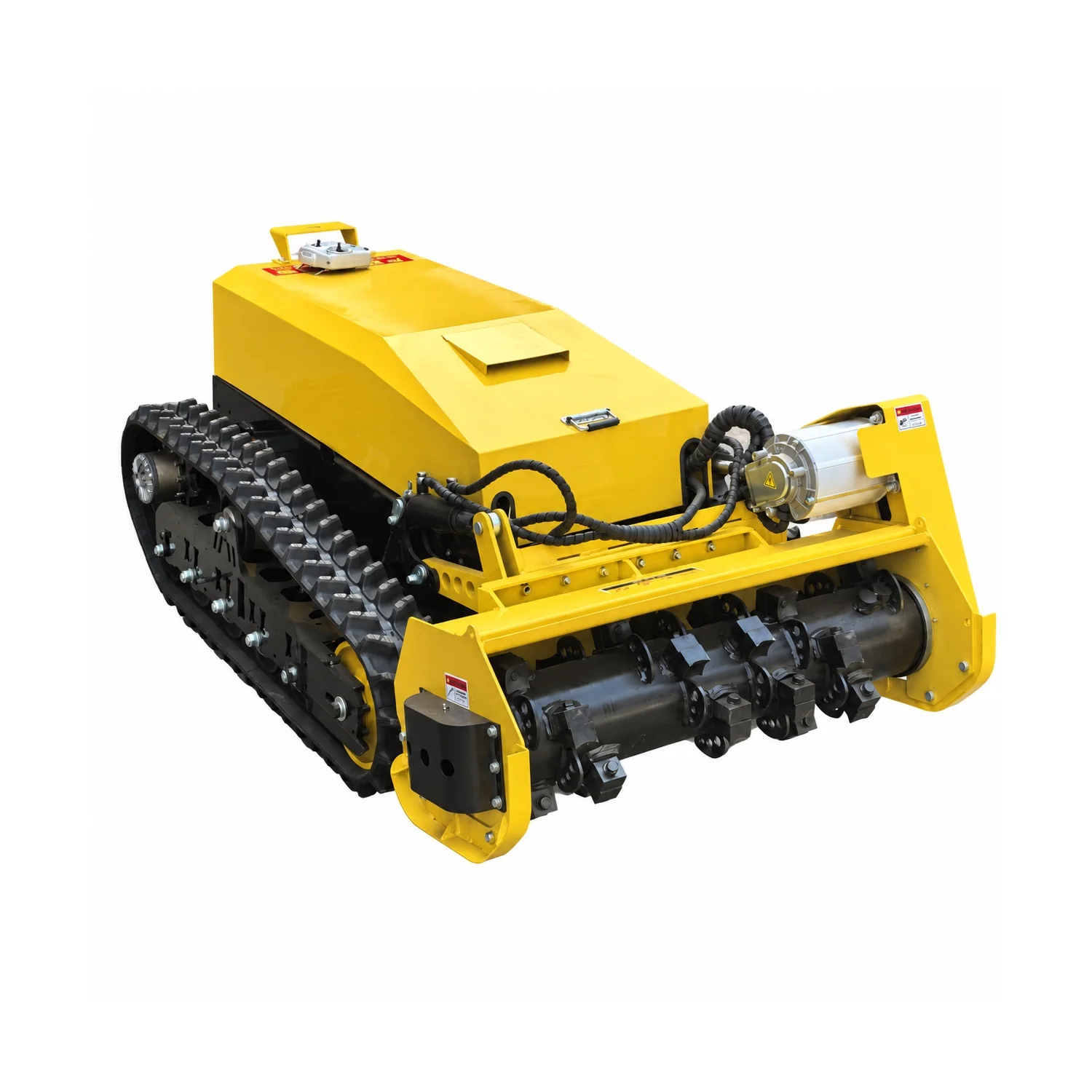
Short answer: A remote forestry mulcher clears honey locust saplings and thickets up to about 30 cm stem size while keeping the operator away from the thorns. Honey locust sprouts from stumps and roots after cutting, so plan follow-up. In the US, the ME-RFM1000-E electric mulcher is the MERI option.
Why honey locust takes over
Wild honey locust is a native tree across much of the eastern and central US. In pastures it spreads fast. Cattle eat the sweet pods and drop the seed in their manure, so new trees appear across the whole field.
The real problem is the thorns. Wild honey locust carries long, branched thorns on the trunk and branches. They puncture tractor and truck tyres, injure livestock and make hand clearing dangerous.
Size decides the method
| Stage | Method | Notes |
|---|---|---|
| Seedlings in pasture | Mowing during the season | A flail mower cuts thin stems |
| Saplings and thickets | Forestry mulcher | Stems up to about 30 cm under suitable conditions |
| Large single trees | Saw work or other methods | Outside mulcher range |
| Stumps after cutting | Follow-up treatment | Sprouts are common |
The ME-RFM1000-E handles stems up to 30 cm under suitable conditions.
Thorns and tyres
Tracked machines cope with thorns far better than tyred ones. The rubber tracks of a MERI tracked mulcher spread the load and are much harder to puncture. Support vehicles are another story. Keep pickups and trailers on cleared lanes, and check tyres after work.
Thorny chips can also pack into track rollers. Clean them out at the end of each session, with the rotor stopped and power off.
Sprouting and follow-up
Honey locust resprouts from cut stumps and from roots. Mulching a thicket to the ground removes the top, but new shoots follow. Many extension guides advise stump treatment or repeated follow-up. MERI does not advise on chemicals; follow the label and local guidance.
A follow-up flail pass in the next season keeps sprouts small. MERI flail mowers cut from 30 to 300 mm and handle thin woody shoots.

Machine choice in the US
The ME-RFM1000-E electric mulcher climbs 45° and works up to 35°. It clears a 1,000 mm path. Diesel models are not supplied to the US market. Plan sessions around charging, and keep a power source near the work area.
For seedlings across open pasture, a gasoline flail model such as the ME1000-48 or ME1200-48 covers ground faster.
Common mistakes
- Mulching thickets but leaving seedlings to grow in the open pasture.
- Driving pickups across the cleared area and puncturing tyres.
- Skipping follow-up and finding a thicket of sprouts the next year.
- Pushing the mulcher into trunks well over 30 cm.
- Forgetting that cattle keep spreading seed from remaining trees.
Many landowners leave a few thornless or useful shade trees. If you do, remove the pods from heavily used areas or accept that seedlings will keep appearing near them.
Planning work through the year
Winter and early spring are popular times for clearing because the trees are leafless and the ground is often firm. Thorns are easier to see without leaves. Plan follow-up passes for late spring and summer, when sprouts are growing fast and easy to spot.
Keep a simple map of cleared areas and the date of each visit. It makes follow-up faster and shows the landowner what was done.
Questions to ask before you start
How many acres are infested, and how dense? How many trees are over 30 cm? Where are the fences, water lines and crossings? Which trees should stay for shade? Who will handle stump follow-up? Answering these before the machine arrives makes the quote accurate and the work faster. It also gives the landowner a clear picture of the follow-up they will need in the next two seasons, which is where most honey locust jobs succeed or fail.
A practical plan
- Walk the pasture and mark thickets, single trees and fence lines.
- Mulch thickets and saplings, starting at the pasture edge.
- Leave large trees for saw crews or other methods.
- Follow up on stumps as your local guide advises.
- Mow seedlings during the season so new trees never get started.
- Check fence lines; seedlings grow where cattle rest.
Related MERI pages
- ME-RFM1000-E electric mulcher
- Tree diameter limits for remote mulchers
- Black locust clearing
- Clearing brush land for pasture
- Keeping fence rows clean
- Remote control mowers in the USA
Frequently asked questions
Can a forestry mulcher clear honey locust?
Yes, for saplings and thickets up to about 30 cm stem size under suitable conditions. Larger trees need other methods.
Will honey locust grow back after mulching?
Yes. It sprouts from stumps and roots. Plan follow-up treatment and mowing.
Do honey locust thorns damage rubber tracks?
Rubber tracks resist thorns far better than tyres. Clean thorny chips from rollers after each session.
Which MERI mulcher is offered in the US?
The ME-RFM1000-E electric mulcher. Diesel models are not supplied to the US market.
Send us your site details
Tell us the job, area, slope and country. MERI replies within 24 hours.
Need a forestry mulcher recommendation for your terrain or project?
Get a Quote