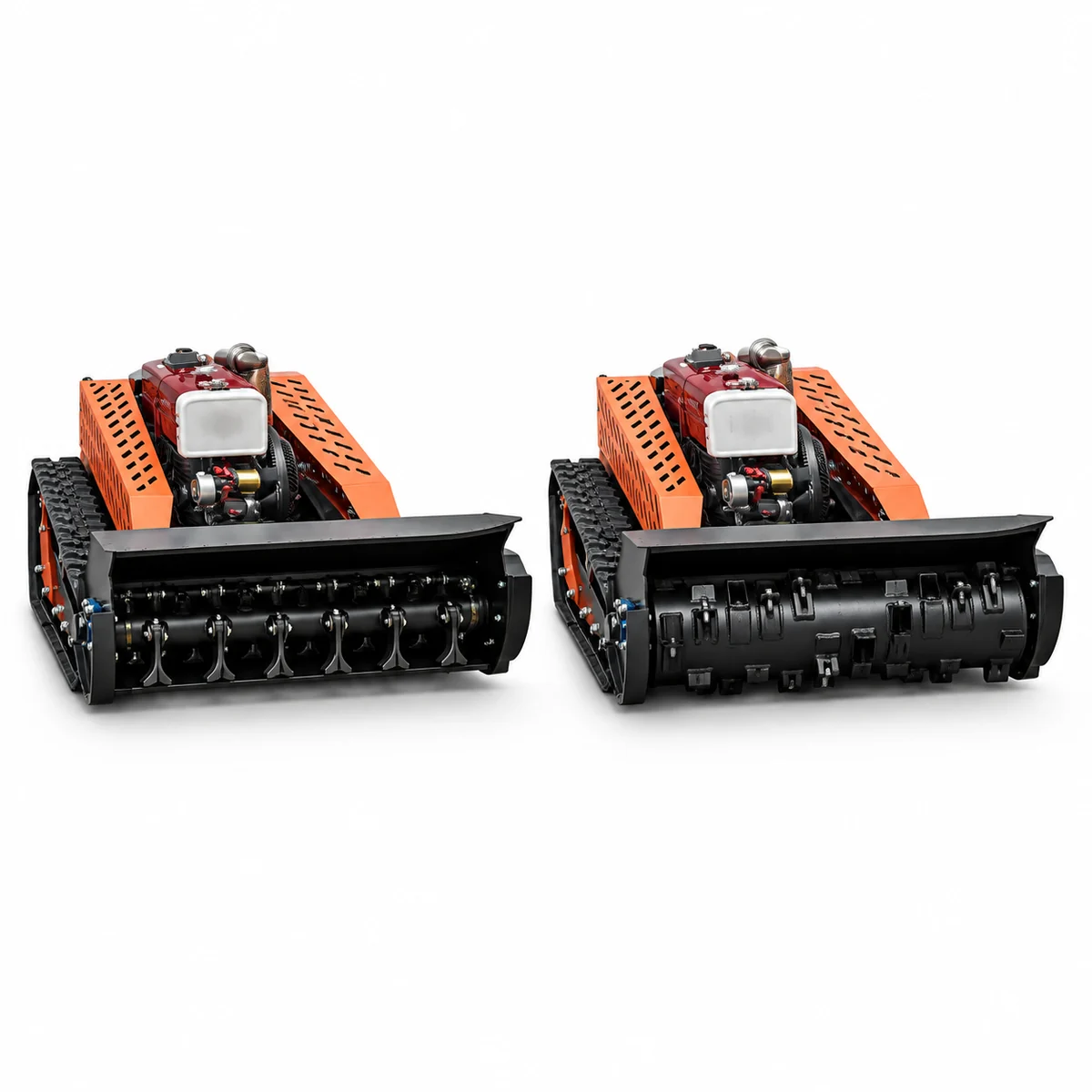
Short answer: Mulch Leucaena thickets in one pass where the stems are small, cut larger stems close to the ground, and plan follow-up rounds because cut stumps resprout and seed remains in the soil. Keep the site short and open after clearing so seedlings are easy to find.
Why Leucaena becomes a thicket
Leucaena leucocephala is a fast-growing tree legume. It was planted widely across the tropics for fodder, shade and firewood. On idle land, roadsides and plantation edges in Southeast Asia, the Pacific, Taiwan and parts of Latin America and Africa, it can form dense, even-aged thickets.
Those thickets are hard to walk through, shade out other plants and produce large amounts of seed. When people try to clear them, the cut stumps often coppice and grow back quickly.
Plan the clearing by stem size
| Stem size | Approach | Note |
|---|---|---|
| Seedlings and whips | Flail mower or mulcher | Fast, low cut |
| Small stems in dense stands | Forestry mulcher | Mulch in place in one pass |
| Larger stems, up to 30 cm | Mulcher under suitable conditions | Work slowly; check the stump height |
| Larger trees | Fell first, then mulch the stump area | Plan separately |
The ME-RFM1000 handles trees up to 30 cm in diameter under suitable conditions. Density and ground matter as much as size.
Measure a few stems before you quote the job. A thicket of thin stems can still take longer than a few big trees.
Mulching technique
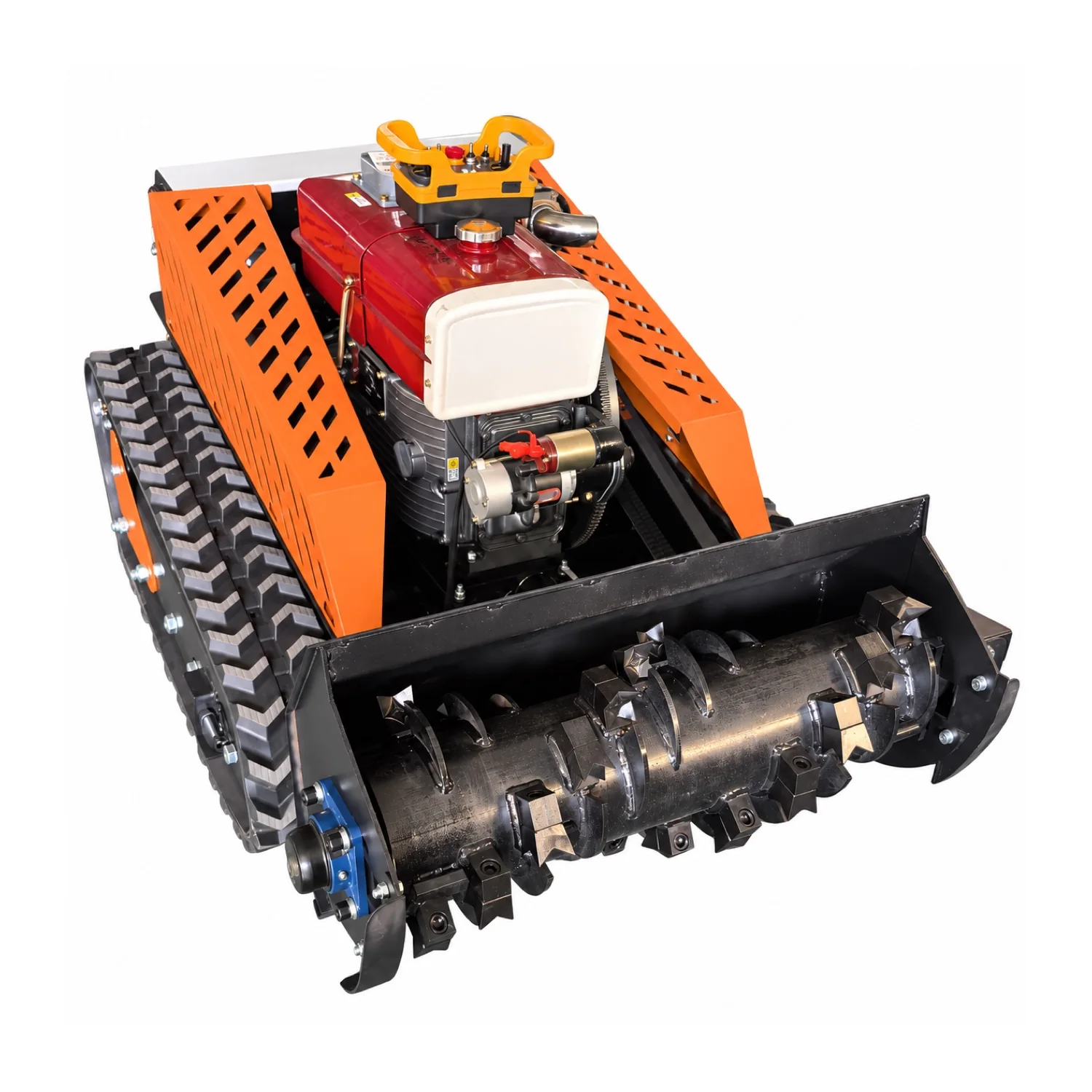
The MERI ME-RFM1000 has a 1,000 mm working width. Work in overlapping strips and let the rotor do the cutting. On the ME-RFM1000-D, toothed blades bite into woody stems; horseshoe blades suit mixed, softer growth.
Keep the cut low and even. Tall, ragged stumps resprout faster and make later mowing harder. Leave the mulch spread, not piled. Thick piles hide seedlings and stumps.
Follow-up after clearing
- Return when the first resprouts are knee high.
- Mow or mulch the regrowth before it hardens.
- Expect seedlings after rain for several seasons.
- Keep the site open and short so new plants are easy to see.
- Follow local advice on stump treatment or replanting.
Many sites become easy to keep once the cleared area is mown on a regular round. The first year needs the most visits.
Where a remote mulcher fits
Leucaena often grows on steep cuttings, gullies and rough idle land. The ME-RFM1000-D is rated to 45°. The ME-RFM1000-E climbs 45° and works up to 35°, and suits sites where low noise matters. The remote has a standard range of 800 m and the machine stops if the signal is lost.
After clearing, a flail mower such as the ME1000-48 keeps regrowth short with a 1,000 mm cut.
Worked example: a roadside cutting
A council asks for 600 m of Leucaena to be cleared from a road cutting, about 8 m deep from the road edge to the top of the bank. That is around 0.5 ha of mostly small, dense stems, with a few larger trees near the top.
Run a short trial strip and time it. Use that rate, not a brochure figure, to estimate the days. Plan the larger trees separately, and add a return visit when resprouts are knee high. Quote the follow-up mowing as its own line, so the client sees that clearing and keeping clear are two different jobs.
Regional notes
In the Pacific islands and Taiwan, Leucaena often lines roads and coastal land. In parts of Southeast Asia and Latin America, it was planted as fodder or shade and has spread from old plantings onto idle fields. Where it is still wanted as fodder, keep it as a managed hedge and cut it on a regular round. Where it is not wanted, clear it and keep the site mown.
Agree the goal with the landowner before you start.
Common mistakes
- Leaving tall stumps that coppice quickly.
- Clearing and not returning for months.
- Piling mulch that hides regrowth.
- Underestimating dense small-stem stands.
- Moving soil with seed to clean sites. Check local rules and advice before you plan a programme; MERI does not give guidance on regulations.
Related MERI pages
- Remote control forestry mulchers
- ME-RFM1000-D diesel mulcher
- Tree diameter limits for remote mulchers
- Horseshoe vs toothed blades
- Mulch layer thickness and regrowth
- Clearing brush land for pasture
Frequently asked questions
Will Leucaena grow back after mulching?
Often, yes. Cut stumps can resprout and seed remains in the soil. Plan follow-up rounds.
What size Leucaena can the ME-RFM1000 mulch?
Trees up to 30 cm in diameter under suitable conditions. Dense small stems are the most common case.
How low should stumps be cut?
As low and even as the ground allows. Tall stumps resprout faster and make later mowing harder.
Electric or diesel mulcher for Leucaena?
Diesel suits long days on rough ground and is rated to 45°. Electric suits noise-sensitive sites and works up to 35°.
Send us your site details
Tell us the job, area, slope and country. MERI replies within 24 hours.
Need a forestry mulcher recommendation for your terrain or project?
Get a Quote