Moving a remote control mower between your shop, trailer, customer property, and demo site is a completely separate task from cutting grass. Even with the engine shut down, a machine can still roll, slide, shift, leak fluids, damage its cutter assembly, or place someone between the machine and a fixed object if things go wrong during loading.
Separate Everyday Transport From Container Freight
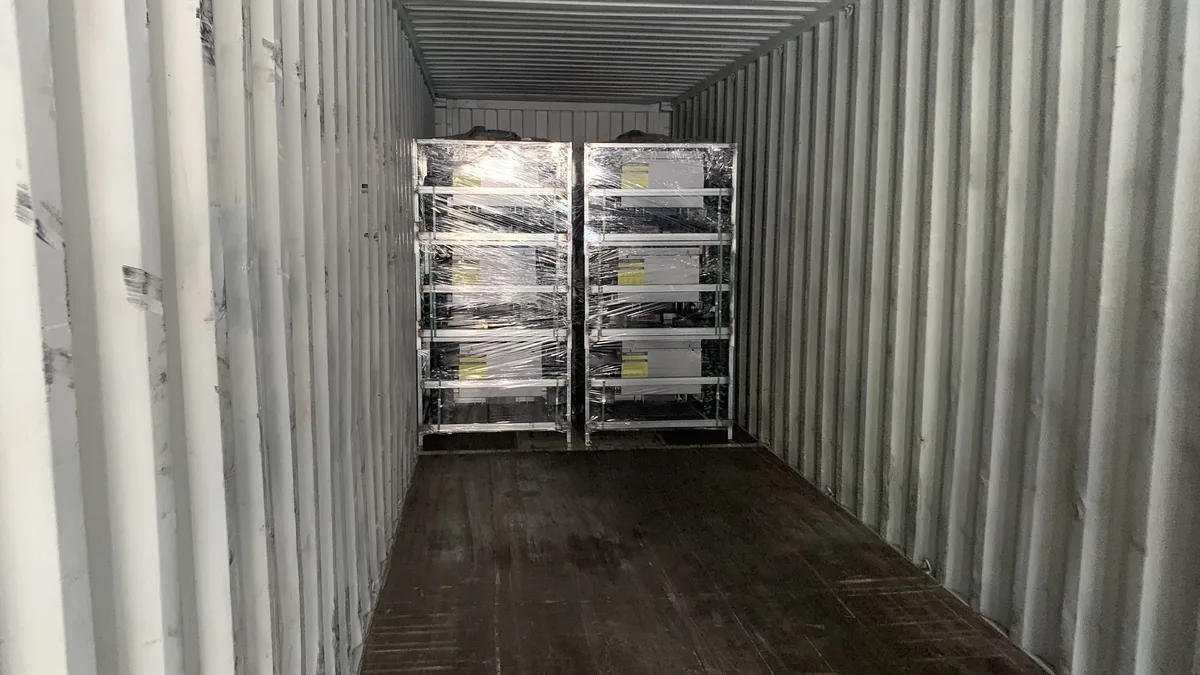
Hauling a mower to a local jobsite on a trailer or flatbed takes a different mindset than packing one for export in an ocean shipping container. Container planning centers on factory packing frames, ocean freight logistics, and port handling. Everyday transport focuses on tow vehicle limits, loading zones, ramps or winches, crew positioning, tie-down straps, road safety, and unloading at the jobsite.
If you’re organizing an international import shipment, start with MERI’s container shipping and Incoterms guide. Once the mower arrives at your shop, establish a written procedure for moving the unit between customer demos and work sites.
Confirm the Machine, Vehicle, and Method
Record the exact mower configuration and use its delivered weight and dimensions. Do not choose a trailer from a similar model’s listing. Include attachments, fuel, batteries, accessories, packaging, ramps, toolboxes, and other cargo when checking vehicle and axle limits.
Confirm that the vehicle, deck, ramps, winch or lifting equipment, anchor points, and restraints are suitable and in serviceable condition. The loading method must match the site: driving under remote control, winching, lifting at approved points, or another manufacturer-authorized method. Never assume a guard, handle, cutter housing, hydraulic line, or convenient frame opening is a lifting or tie-down point.
Prepare a Clear, Level Loading Area
Choose firm, level ground with enough space, visibility, and overhead clearance. Keep pedestrians, customers, and other vehicles out of the loading zone. Apply the vehicle brake and use the stabilizers or other vehicle controls specified for the equipment. Inspect the trailer floor, ramps, hinges, pins, and edges before bringing the mower close.
The UK Health and Safety Executive’s loading guidance advises keeping loading areas clear of unrelated people and traffic, using firm level ground, checking the deck, spreading loads appropriately, applying brakes and stabilizers, and agreeing the loading process when more than one company is involved. Treat the arrival site as carefully as the home yard.
Shut Down and Isolate Before Securing
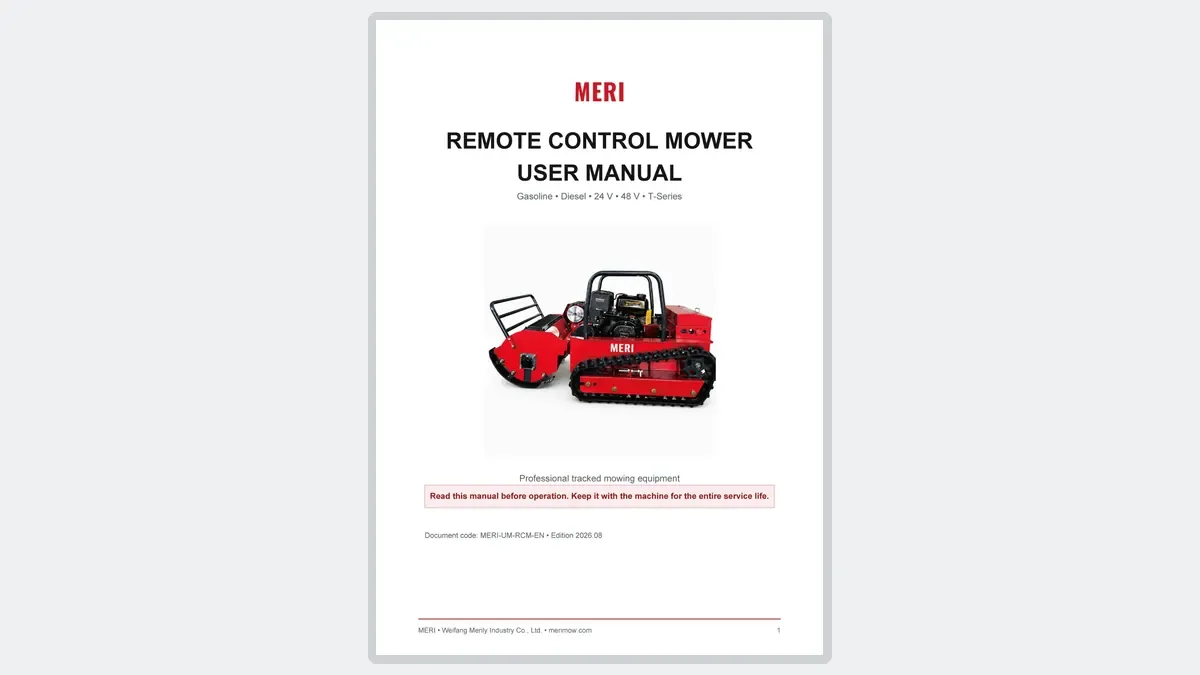
The current MERI user manual instructs transport crews to stop the engine, close the fuel valve where fitted, and isolate the battery. Follow the delivered manual because the isolation sequence and components can differ by configuration. Allow hot areas to cool and check for loose material, damage, or leakage before transport.
Remove or secure the remote controller, keys, loose tools, spare parts, charger, and documentation. Protect the controller from unintended input and weather. If an attachment or cutter position must be lowered, raised, locked, or supported for transport, use the model-specific instruction rather than improvising.
Drive or Winch Slow and Steady
Brief your crew before moving the machine and pick one person to direct the loading process. Keep everyone out of pinch points, off trailer sides, and out of the machine’s direct line of travel. A spotter should stand well clear of the machine on level ground—never stand downhill, directly behind tracks, between the mower and vehicle, or under a ramp edge.
Keep driving inputs smooth and maintain slow, deliberate travel speeds. Stop immediately if a track slips on a ramp, a ramp shifts, you lose sight of your spotter, radio signals lag, or the machine moves unexpectedly. Never try to push or guide a powered machine up a ramp by hand, and never use crew members to weigh down ramps.
Balance the Load for Road Stability
Position the mower on the trailer to match your tow vehicle’s weight distribution guidelines. Check tongue weight, axle loads, ground clearance, and space for other cargo. Even if a machine physically fits on a trailer, placing it too far forward, rearward, or to one side can make the vehicle unstable.
Lower movable components as directed in the manual while keeping dedicated tie-down points accessible. Keep straps and chains clear of sharp metal corners, hydraulic lines, wiring harnesses, control linkages, hot engine parts, and flail blades. Use blocking or chocks where required, and do not rely on a parking function as the only restraint.
Use Rated Tie-Downs and Designated Points
Inspect straps, chains, binders, hooks, anchor points, and edge protection. Reject damaged, cut, stretched, corroded, unlabeled, or otherwise unsuitable components under the applicable rules. Attach only to designated structural points and tension the system so the mower cannot roll, slide, tip, or allow the cutter assembly to move.
In the United States, 49 CFR Part 393 Subpart I requires cargo to be contained, immobilized, or secured against unsafe shifting and requires securement components to be in proper working order. It also includes detailed working-load and tie-down requirements. Other jurisdictions have their own rules, so the person responsible for transport must select a compliant system for the actual machine and vehicle.
Complete a Walkaround Before Departure
Walk around the full vehicle and check every restraint, hook, binder, anchor, ramp, door, tailgate, light, tire, and loose item. Confirm that no restraint can contact a sharp edge without suitable protection and that nothing blocks lights, plates, visibility, or required markings. Record the machine identity, vehicle, driver, date, route, and inspection result if transport is part of dealer or contractor operations.
Recheck the load as required by local law and after any event that could loosen or shift it. Stop in a safe place if handling changes, a noise develops, or a restraint appears different. Never adjust a load at the roadside without first controlling traffic and movement risks.
Plan Unloading Before the Vehicle Moves
Before releasing restraints, inspect whether the mower or other cargo shifted in transit. The HSE warns that loads may move or fall when restraints are removed. Park on firm level ground, control the unloading zone, apply the vehicle controls, and agree the sequence before anyone removes a tie-down.
Remove restraints from a safe position and keep people clear of the direction the load could move. Reinstall ramps or set up lifting equipment exactly as required. Complete a post-transport inspection before operation, including visible damage, leaks, loose components, tracks, cutter area, controls, and the prescribed pre-start checks.
Dealer and Contractor Transport Record
| Stage | Record | Stop condition |
|---|---|---|
| Plan | Machine/configuration, documented weight, vehicle, route, people, method | Unknown specification or unsuitable equipment |
| Area | Level surface, exclusion zone, lighting, clearance, weather | Uncontrolled people, unstable ground, poor visibility |
| Load | Ramps/lift checked, controller assigned, slow movement, final position | Slip, ramp movement, lost communication, unexpected response |
| Secure | Shutdown, isolation, designated points, rated restraints, chocks as required | Damage, unsuitable anchor, uncertain restraint capacity |
| Depart | Walkaround, doors/ramps, lights, tires, documents, check schedule | Loose item, obstructed light, unstable load |
| Unload | Shift check, clear zone, controlled restraint release, post-transport inspection | Load under unexpected tension or unsafe unloading area |
Tie Transport Safety to Demos and Shop Service
Train your delivery drivers and field reps on the exact machine builds they haul out to jobsites. Connect your daily transport routine with our dealer demo checklist, and log any transit wear or strap damage in your shop’s maintenance record. Good record-keeping helps clear up whether an issue happened during transit or while working out in the field.
Frequently Asked Questions
Can I tie down a remote mower over the cutter deck?
Do not assume so. Use only the designated points and method in the delivered instructions. A cutter guard or deck may not be a structural tie-down point, and a restraint can damage components or create an unsafe load path.
How many straps or chains does a remote mower need?
There is no universal number. It depends on machine mass and geometry, vehicle, restraint layout, anchor points, working-load limits, blocking, route, and local rules. Use a competent transport plan for the exact load.
Should the battery be disconnected for transport?
The current MERI manual says to isolate the battery for transport. Follow the delivered model and controller instructions for the exact isolation method, and secure the controller against unintended input.
Can I load on a roadside slope if the site has no level area?
Do not improvise. Relocate to a suitable loading point or use a professionally planned alternative method and traffic controls. Loading on unstable or sloping ground can change vehicle, ramp, and machine stability.
Need a mower recommendation for your terrain or project?
Get a Quote